
Circularity is a systems challenge. But businesses, local authorities and other organisations don’t need to change the whole system to start making progress. They need to understand where they sit within it, how they influence it, and which levers they can pull.
Systems thinking helps us look beyond individual problems to understand the relationships, flows and feedback that shape how a system behaves. Donella Meadows’ work on systems highlighted that interventions can happen at very different levels – from changing physical flows and rules to improving information, shifting incentives and, ultimately, changing the purpose or goals of a system.
For circularity, this is particularly useful. Products and materials don’t move through the economy in isolation. Their journey is shaped by policy, infrastructure, procurement, product design, investment, information, customer behaviour and the decisions made by many different organisations.
The practical question therefore becomes: where are you in the system – and what can you influence?
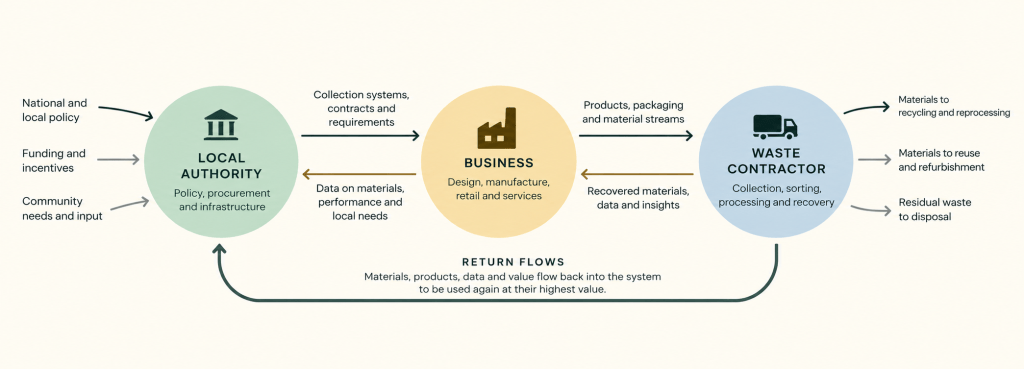
Different roles. Different levers.
A local authority, a business and a waste contractor may be working towards similar outcomes, but they don’t have the same ability to create change.
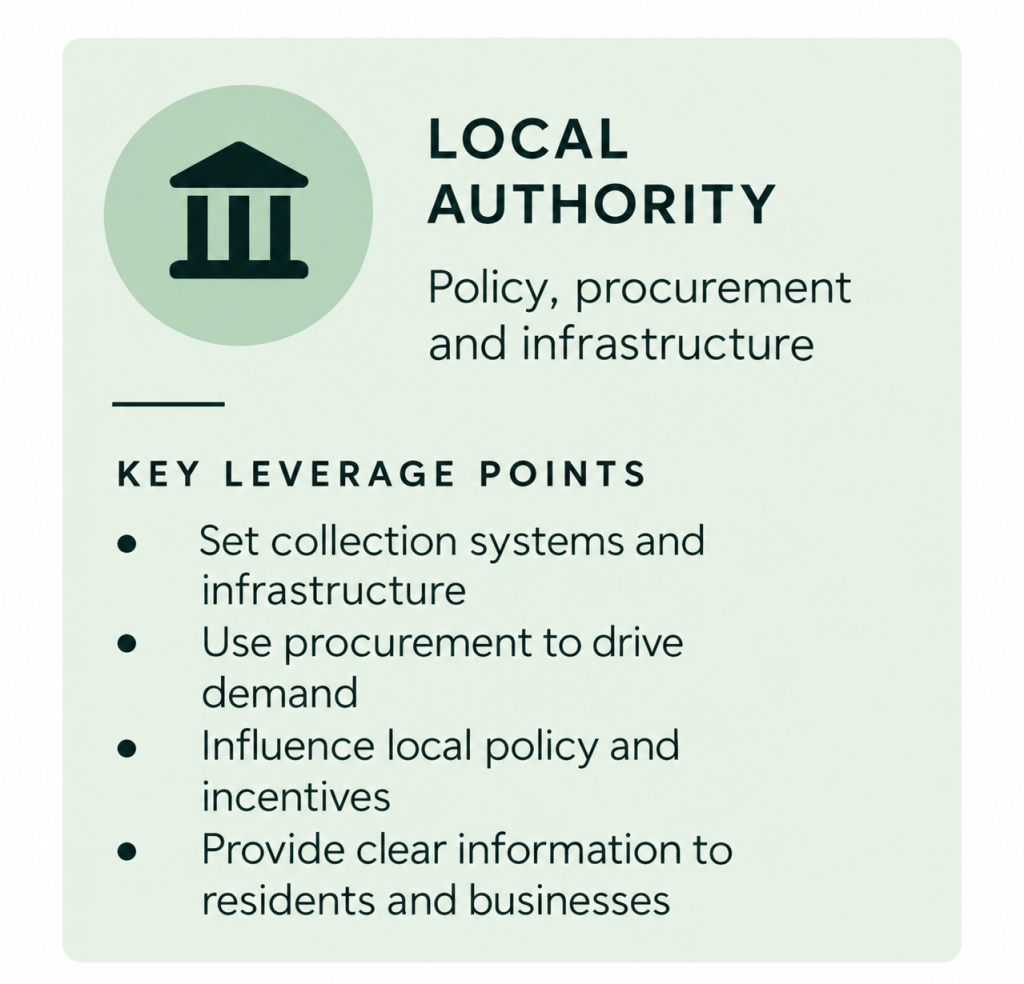
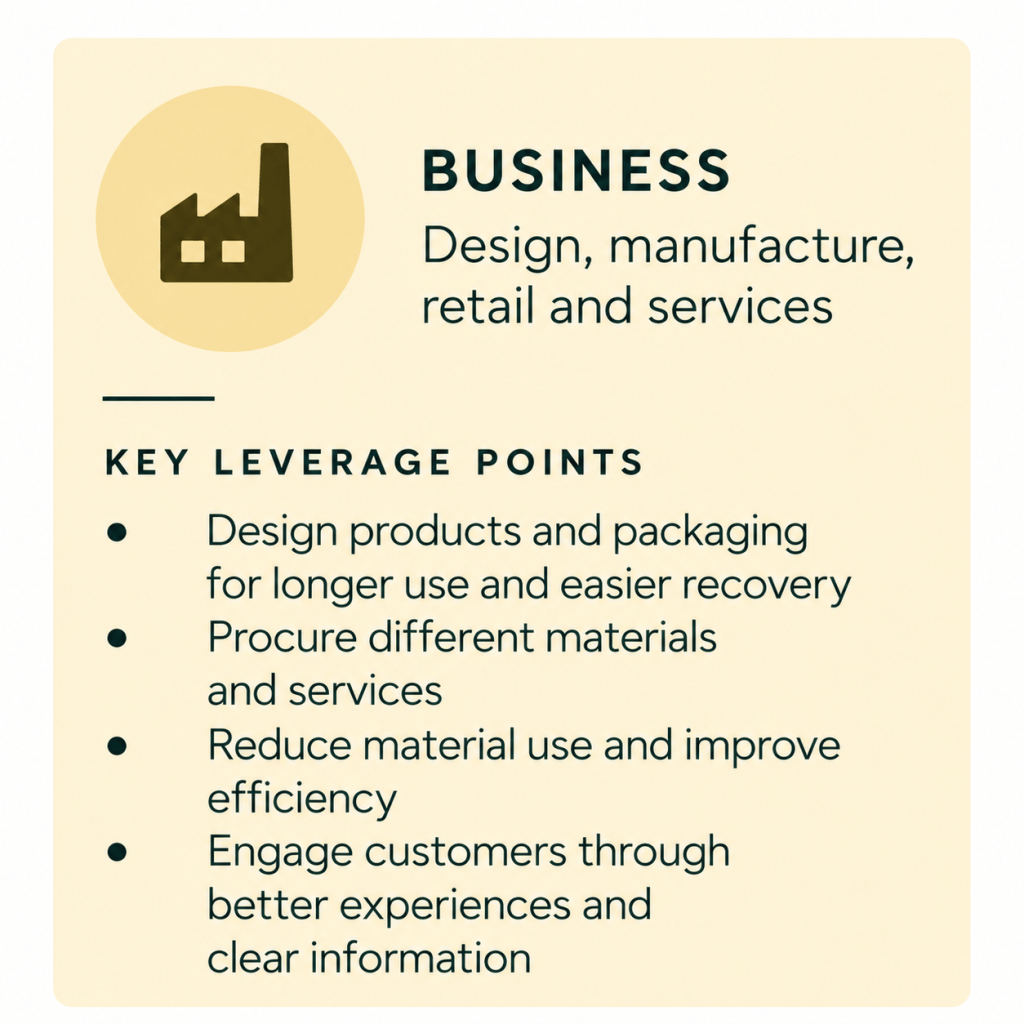
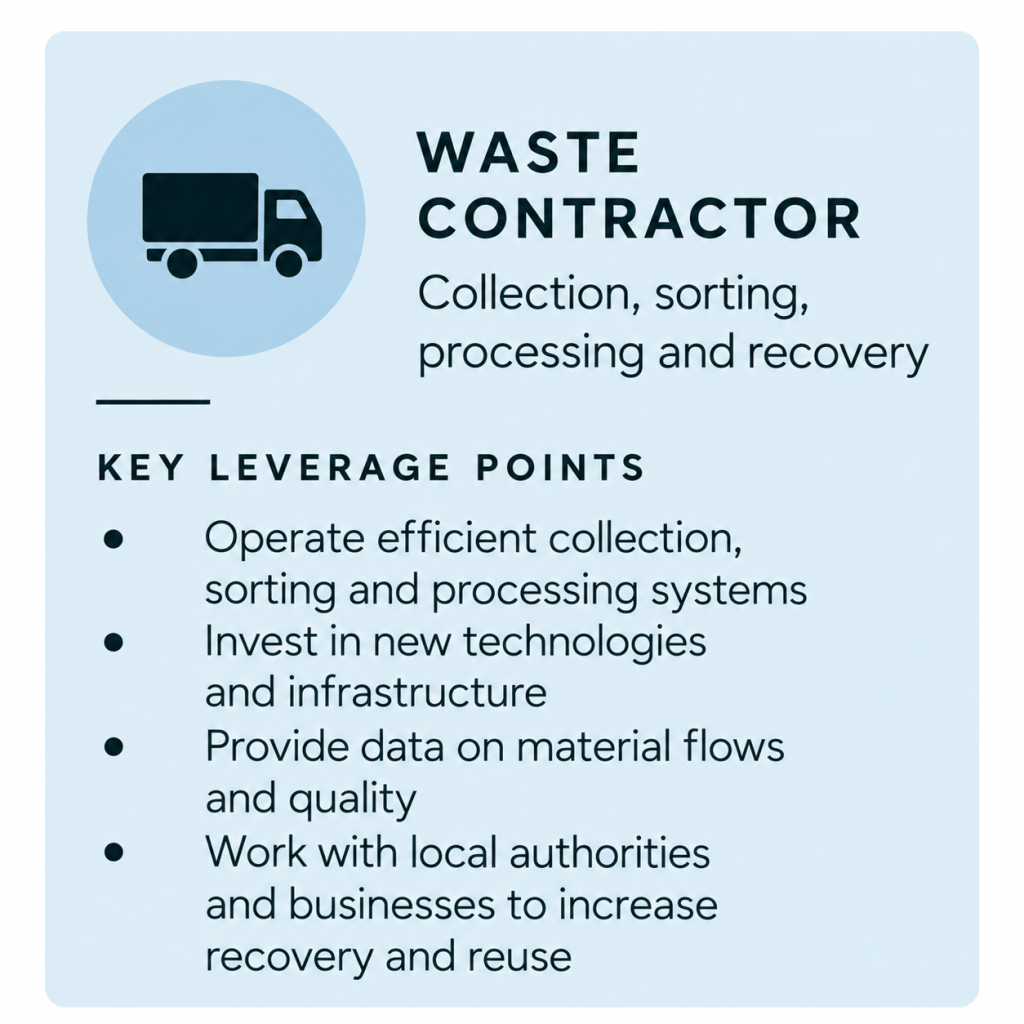
A local authority can influence procurement, infrastructure, collection systems and local policy. A business can change what it buys, how products are designed, how resources are used and the services it offers customers. A waste contractor can change collection, sorting, processing, recovery and the information available about material flows.
The opportunity isn’t for every actor to do everything. It’s to identify the interventions available to them – and understand how those interventions affect the rest of the system.
Information changes what a system can do
One of the most useful insights from systems thinking is the importance of information flows.
An organisation may have the ability to act but still lack the information needed to make a different decision. A procurement team may not know what happens to a material at end of use. A designer may not know what a waste contractor can recover. A waste contractor may see valuable materials being lost but have no route for feeding that information back to the businesses specifying them.
The material flow may be visible. The information flow often isn’t.
Improving circularity therefore isn’t only about moving materials differently. It can also mean changing who knows what, when they know it, and whether that information reaches the people able to act on it.
This is also where AI creates new possibilities. The challenge is increasingly not a lack of information, but that useful information is fragmented across datasets, documents, organisations and parts of the value chain. AI can help process and connect that information, identify patterns and relationships, and turn large amounts of fragmented data into insight that people can use.
It doesn’t remove the need for expertise, judgement or collaboration. But it can change how quickly we understand a system, what we are able to see within it, and how effectively information can support better decisions.
Finding the leverage point
Systems thinking gives us a way to understand complexity. The value comes from turning that understanding into action.
That might mean changing a procurement specification, redesigning a customer journey, improving the information shared between teams, testing a new recovery route, changing a contract, building a business case or bringing organisations together around a shared problem.
The intervention may be relatively small. What matters is understanding how it interacts with the wider system.
At Possible, we use systems thinking as a practical problem-solving tool: to understand what’s happening, identify where influence sits and find the interventions that can move an opportunity forward.


Leave a comment